Show Production for High Net Worth Individuals: A Reference
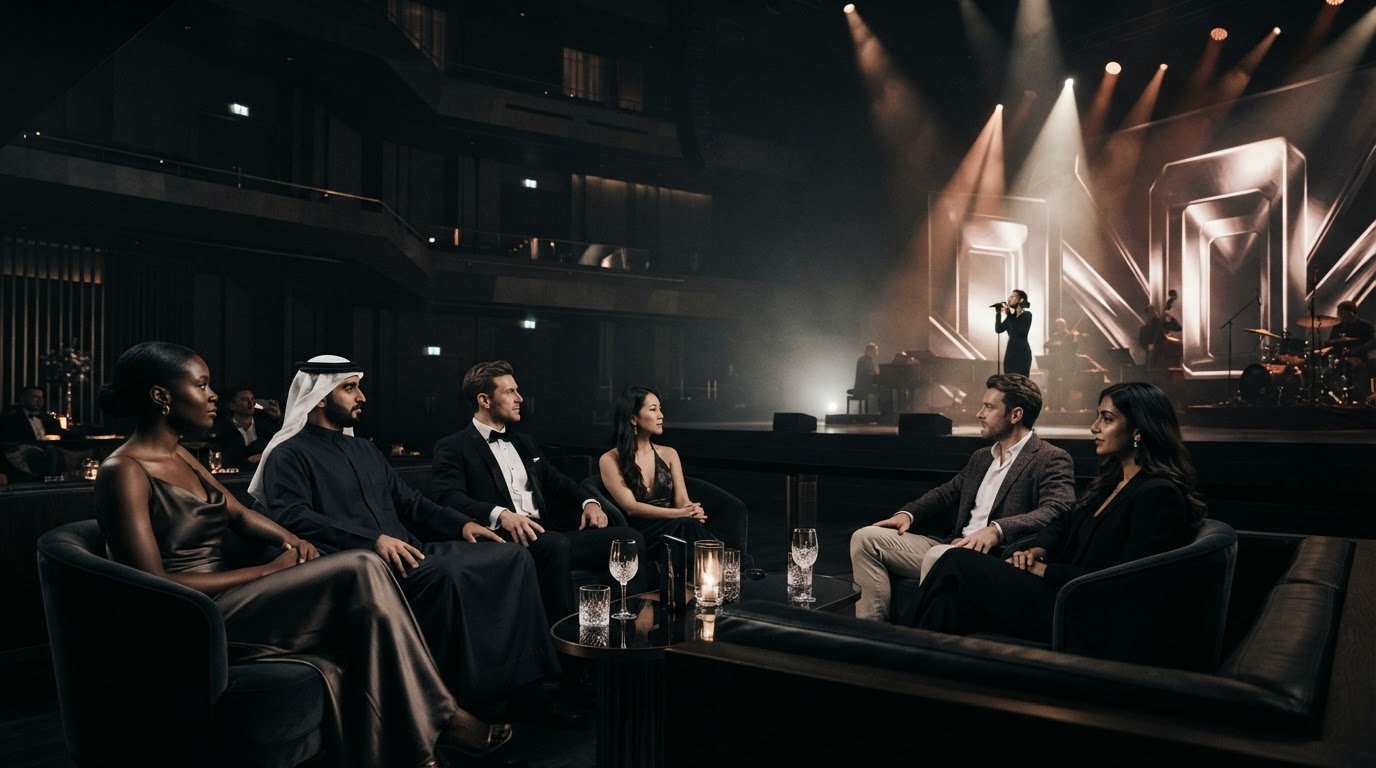
In 2024, the global high-net-worth individual population reached 23.413 million. Show production for high net worth individuals brings live entertainment, creative direction and technical delivery together around a private occasion and its guests. The experience can extend beyond the event itself, with personalised digital touchpoints shaping how guests receive information and engage with the occasion.
Wealth definitions vary by market and by the assets counted. In financial services, a high-net-worth individual is typically someone with more than US$1 million in financial assets, excluding their primary residence. The UK has 2.86 million high-net-worth individuals, giving organisers a substantial audience for considered, high-calibre experiences.
This reference explains the kinds of private events and luxury shows produced for high net worth individuals, how personalisation can connect digital and live experiences, and what the global and UK figures show. It also covers the practical production elements that turn an ambitious concept into a coherent event, from creative direction and technical production to site management.
Key Takeaways
• Match the format of a private event to its purpose, setting and guests, then shape the live experience around those priorities.
• Build a budget around the creative brief, venue, production requirements and event logistics rather than relying on a generic estimate.
• Assess a producer’s relevant experience, creative judgement and ability to coordinate complex delivery before appointing them.
• Plan in clear stages, from defining the brief and selecting the venue to coordinating production and managing event-day delivery.
• Map permits, insurance and contract requirements to the event’s location, activities and responsibilities, as these factors can vary.
What types of private events and luxury shows are produced for wealthy clients?
A high-net-worth individual (HNWI) is typically defined in financial services as someone with more than US$1 million in financial assets, excluding their primary residence. The UK definition commonly uses £1 million to £5 million in liquid assets. A very-high-net-worth individual has at least US$5 million in investable assets; an ultra-high-net-worth individual has at least US$30 million. These categories describe wealth, not a fixed event style.
A private celebration is an event created for a personal milestone or gathering. Birthdays, anniversaries and family celebrations can combine a formal dinner with a live performance. A 60th birthday, for example, might open with a seated meal, move into a short musical set, then finish with dancing. The sequence, room design and entertainment should reflect the host’s purpose and the guests’ relationship to them.
A destination event is a private occasion held away from the host’s usual location. A weekend in London, Los Angeles or a countryside estate may bring guests together on different schedules and from different arrival points. Production planning connects the venue, guest journey and programme into one experience. A welcome reception, main event and closing gathering should each have a distinct purpose, rather than repeating the same format.
A philanthropic event is a gathering organised to support a charitable cause or communicate its work. A benefit dinner might pair speeches with a performance, while a private reception could give guests time to meet the organisation’s representatives. The programme should make the cause clear without allowing formal remarks to overwhelm the occasion. Ultra-high-net-worth individuals made 38% of all individual philanthropic donations in 2022.
A cultural or brand event brings guests together around an artistic, creative or business identity. A fashion presentation, private exhibition or product unveiling can use lighting, sound and staging to focus attention. For example, a gallery reception might include a live musical performance between viewing periods. Creative choices should support the work or brand, not compete with it.
A private performance is live entertainment presented for a defined group of guests. It might be a solo recital, a small ensemble or a staged show with several acts. Luxury performance concepts such as Catwalk Opera illustrate how live vocal artistry can be tailored specifically to high-end settings. The format depends on the venue, audience and intended atmosphere. A sequence of shorter performances can suit a reception, while one uninterrupted set may anchor a formal evening.
A personalised digital experience uses digital touchpoints to guide or enrich a guest’s participation. A tailored invitation, event schedule or digital programme can provide useful information before and during the occasion. For a three-part event, a consistent visual language can carry from the invitation to venue screens and the final programme. This continuity supports the live experience without replacing the performance.
What factors affect the budget for a luxury private event or performance?
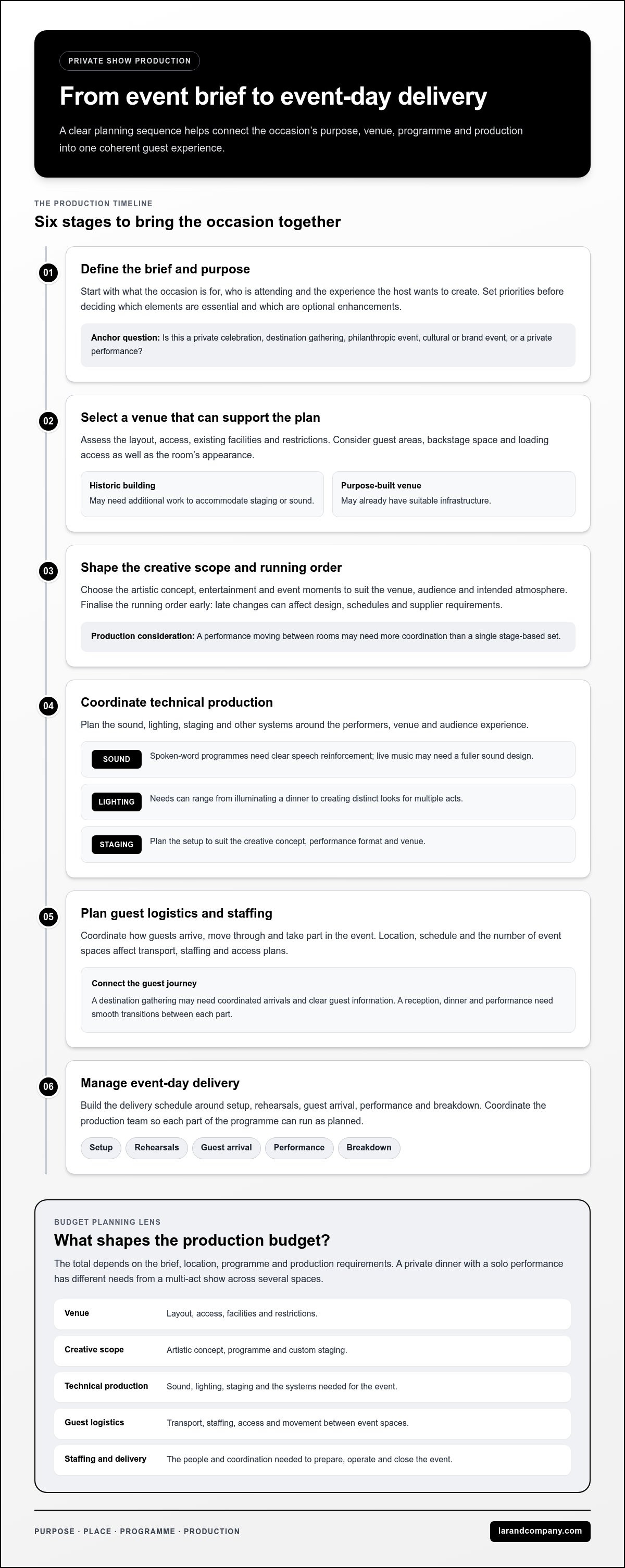
An event budget is a financial plan for the resources needed to deliver an occasion. The total depends on the brief, location, programme and production requirements. A private dinner with a solo performance has different needs from a multi-act show across several spaces. Define the event’s purpose first, then distinguish essential elements from optional enhancements.
The venue is where the event and its production take place. Its layout, access, existing facilities and restrictions can affect planning and delivery. A historic building may need additional work to accommodate staging or sound, while a purpose-built venue may already have suitable infrastructure. Consider guest areas, backstage space and loading access as well as the room’s appearance.
The creative scope is the artistic concept and programme planned for the occasion. A live ensemble, custom staging and distinct event moments each require different resources. A performance that moves between rooms, for example, may involve more coordination than a single stage-based set. Finalise the running order early: late changes can affect design, schedules and supplier requirements.
Technical production covers the sound, lighting, staging and other systems needed to realise the event. Requirements depend on the performers, venue and intended audience experience. A spoken-word programme needs clear speech reinforcement, while a live musical set may require a fuller sound design. Lighting needs also vary, from illuminating a dinner to creating distinct looks for multiple acts.
Guest logistics are the arrangements that help guests arrive, move through and take part in the event. The location, schedule and number of event spaces affect transport, staffing and access plans. A destination gathering may need coordinated arrivals and clear guest information. A programme with a reception, dinner and performance needs smooth transitions between each part.
Staffing and delivery cover the people and coordination needed to prepare, operate and close the event. A single-room performance and a multi-space programme place different demands on the production team. Build the schedule around setup, rehearsals, guest arrival, performance and breakdown. The timing and complexity of these activities shape the crew requirements and operational plan.
Contingency is a planned allowance for changes or unexpected requirements. It gives the budget room to respond without disrupting essential delivery. Identify elements most exposed to change, such as weather-dependent arrangements or a complex venue setup. Review these risks as the plan develops, rather than treating contingency as an unassigned extra.
An event quote depends on the brief and is provided after a quote request. The venue, programme, technical scope and location all shape the estimate. For a complex project, discussing production requirements can clarify the scope before planning progresses.
How do you find and vet show producers for high-net-worth clients?
A show producer coordinates the creative and practical delivery of a live event. Start by defining the occasion, audience, location and intended experience. A private performance in a historic London venue needs different planning from a multi-day celebration abroad. Use the brief to identify producers whose experience matches the event’s scale and format.
A referral is a recommendation based on someone’s direct experience of a producer’s work. Ask trusted event stakeholders, venue teams or advisers for relevant introductions. Then assess each producer against the brief, rather than relying on reputation alone. A producer known for conferences may not suit an intimate musical performance or a complex, multi-space celebration.
A portfolio review examines completed projects to understand a producer’s work and responsibilities. Look for examples with comparable creative ambition, locations or production challenges. A polished photograph shows the finished setting, but not who planned the running order or coordinated delivery. Ask what the producer led, which teams were involved and how the project’s requirements shaped the final experience.
Scope alignment means ensuring the producer’s responsibilities match the event’s requirements. For a dinner followed by a live show, establish who coordinates the creative concept, technical plan, venue operations and schedule. Request a clear division of responsibilities between the producer, venue and other suppliers. This can reveal overlaps or gaps before planning advances.
Operational capability is the ability to turn a creative brief into a workable production plan. Discuss how the producer handles site visits, technical reviews, rehearsals and running-order changes. For example, ask how a revised performance sequence would affect staging, sound checks and guest movement. The answer should show a clear process, not just enthusiasm for the concept.
References are accounts from people who have worked directly with the producer. Ask about a comparable event and the producer’s specific contribution. Useful topics include decision-making, communication, schedule management and responses to changes. A reference for a large public show may reveal little about discretion and detail at a private gathering, so prioritise relevant experience.
A written proposal sets out the proposed scope, responsibilities, assumptions and planning approach. Compare proposals against the same brief, including the event programme, venue conditions and technical requirements. Clarify what each phase covers and how changes are handled. A concise, project-specific proposal makes it easier to judge whether the producer understands the event’s priorities.
A chemistry meeting helps assess whether the working relationship suits the event’s needs. Bring the brief and ask the producer to outline the first planning steps. Notice whether they listen, identify practical considerations and explain decisions clearly. For a high-stakes private occasion, choose a producer whose relevant experience and working method fit the project.
What steps are involved in planning a private luxury show
A production plan is the sequence of decisions that turns an event brief into a live experience. For a private show combining dinner and music, the programme, venue, guest journey and technical setup must work as one coordinated plan. Use these steps to move from the initial idea to event-day delivery.
Define the brief.
A brief records the event’s purpose, audience and desired atmosphere. Describe what guests should experience, from arrival to departure. For a private anniversary, the priority might be an intimate dinner followed by a personal musical performance. Identify essential moments, decision-makers and practical constraints before developing the creative concept.
Set the event parameters.
Event parameters are the conditions that shape planning and production. Confirm the location, date, guest profile, event format and available spaces. A city-centre venue and a country estate create different access and movement requirements. Note whether guests will travel between locations or remain in one space throughout the programme.
Develop the creative concept.
A creative concept gives the occasion a coherent look, feel and narrative. Translate the brief into decisions about staging, lighting, décor and performance. For a gallery reception, the design might keep artworks visible while creating a focal point for a short live set. Check that each element supports the event’s purpose.
Build the running order.
A running order is the timed sequence of event activities. Map guest arrival, welcome, dining, speeches, performance and transitions. Allow the programme to accommodate practical needs, such as clearing a dining area before performers enter. Share the schedule with venue teams and production leads so responsibilities remain clear.
Plan the site and technical requirements.
A site plan shows how the venue will support guests, performers and production activity. Mark entrances, audience areas, backstage space and equipment positions. Review sound, lighting, power access and sightlines with the venue. For a performance in a historic room, check how staging can fit without obstructing architectural features.
Coordinate suppliers and responsibilities.
Supplier coordination aligns the teams delivering each part of the event. Set out who manages venue operations, technical setup, décor, catering and guest information. Use a shared schedule and clear approval process. If a speech moves later in the programme, all affected teams need the revised running order.
Rehearse and prepare for delivery.
A rehearsal tests the programme and production plan before guests arrive. Walk through entrances, cues, microphone handovers and transitions. Confirm the final schedule with performers and event teams, then brief staff on guest movement. On the day, use one agreed communication route to manage decisions and keep delivery aligned.
Review the completed plan against the brief, running order and site requirements before event day, confirming that each team has the information needed for delivery. Ultra-high-net-worth portfolios allocate 20% to luxury items. Keep that context in view when aligning the show’s scale and details with the occasion.
What permits, insurance, and contracts are required for private event production
An event permit is an approval or authorisation related to an event’s activities or location. Requirements depend on the country, local authority, venue and planned programme. A private dinner in a hotel differs from a temporary outdoor performance with amplified sound. Start by listing the location, audience access, timings, structures and activities. Use that information to identify the permissions that apply locally.
A venue approval is the venue’s agreement to the event plan and use of the site. It is distinct from permissions issued by public authorities. A historic property, for example, may set conditions for staging, rigging, sound levels or access to protected areas. Ask the venue about its approval process, then record deadlines and responsibilities in the production schedule. Changes to the programme or layout may require a fresh review.
Event insurance is cover intended to address specified risks arising from an event. The relevant cover depends on the activities, venue terms and parties involved. A live performance, temporary structure or hired supplier can raise different questions from a seated reception. Review the policy scope, exclusions, limits and insured parties against the event plan. The venue agreement may also set insurance conditions for organisers or suppliers.
A supplier contract is a written agreement defining the work, responsibilities and terms between parties. For a performance, it should identify the agreed scope, schedule, payment arrangements, cancellation terms and approval process for changes. Clarify who supplies staging, sound equipment and crew. If the running order changes, written approval helps align the schedule, technical plan and charges. Avoid relying on informal messages for material changes.
A performer agreement records the terms for a live act or presentation. It can set out performance times, rehearsal needs, technical requirements, travel arrangements and cancellation provisions. A musician’s requirements, for instance, may include a sound check and a defined stage setup. Share these details with the venue and technical production team early so the event plan reflects the performance’s operational needs.
A production schedule is the working record of approvals, documents, deadlines and responsibilities. Create a shared register listing each item’s owner, action date and status. Include venue approvals, authority correspondence, insurance documents and signed agreements. For a London event with an overseas performer, track local venue conditions alongside the performer’s agreed requirements. Keep final versions accessible to the responsible event team.
For a complex programme, discuss technical production requirements alongside the venue plan and supplier responsibilities. Clear coordination aligns the show’s technical needs with event documentation and the delivery schedule.
Lar&Co: Show Production
Lar&Co brings creative direction and production together for high-profile live entertainment. Turn to the team when a private show needs a clear concept, precise technical delivery and coordinated site management. These disciplines connect the creative brief with the practical demands of the venue and programme.
For example, a private performance may involve shaping the creative approach, coordinating the technical plan and managing activity on site. Lar&Co delivers these elements as part of a coherent production tailored to the project’s requirements.
If you’re planning a private show, contact Lar&Co to discuss your event.
Shape the Experience Beyond the Event
The next decision is what guests should take away after the final moment. For show production for high net worth individuals, a consistent experience can connect the first digital invitation with the live programme and closing communication. Whether that involves producing bespoke commemorative interviews or audio-visual recaps with specialists like Podcast Zurich, high-calibre media keeps guests engaged well after the gathering concludes. That continuity starts with a clear creative point of view, which then guides practical decisions across the project.
Lar&Co brings Show Production, Technical Production and Site Management to live entertainment projects. These capabilities connect creative intent with technical delivery and on-site coordination. Bring the team a brief setting out the occasion, audience and intended atmosphere. This gives the planning conversation a clear starting point and helps define production priorities.
A considered experience doesn’t need to be elaborate at every turn. Each choice should serve the occasion and feel coherent to its guests. If you’re ready to develop your event brief, contact Lar&Co about show production. Give your next occasion a clear direction and a composed path to delivery.
Frequently Asked Questions
What does show production for high-net-worth individuals include?
Show production for high-net-worth individuals brings the creative concept and live delivery into one coordinated project. It can include creative direction, technical production, site management and financial management, shaped around the event’s brief. For example, Lar&Co’s work includes Gucci Cosmos and the UAE’s 50th National Day Celebration. For projects in the UK, USA, United Arab Emirates, Saudi Arabia or Qatar, the production approach can reflect the brief, venue and local context.
What are the risks and common challenges of producing luxury private shows?
Common challenges include venue restrictions and access needs, coordination across multiple spaces, and late changes that affect design, schedules and suppliers. Weather-dependent plans and complex venue setups also call for contingency planning.