Reliable live event partner options for support, fit and cost
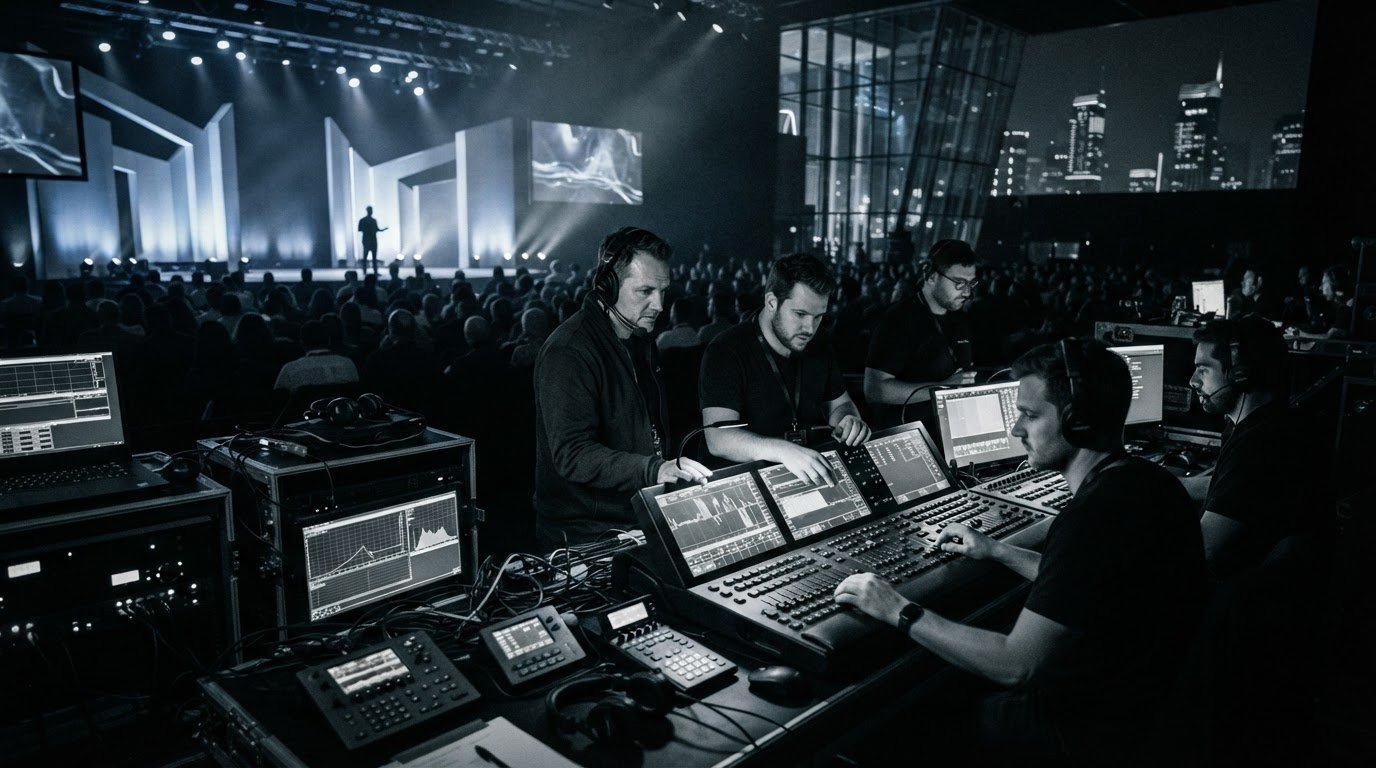
A production partner responsible for AV delivery should have technicians on site on the day. A reliable live event partner also carries decisions from pre-production through to live delivery, so the team overseeing the show understands its plan, cues and technical requirements. Judge day-of support alongside the full production scope, not as a stand-alone promise.
Look beyond equipment and ask how the team will manage changes, coordinate with the wider event crew and keep the programme on track. This guide explains how to compare event AV partners on technician support, reliability, creative fit, communication, relevant expertise and budget. You’ll learn what effective pre-production involves, how to assess a partner’s ability to deliver your vision, and which scope and cost details matter. The goal is a clear, like-for-like comparison and the right level of technical and creative support for your event.
Key Takeaways
• Clarify who will lead the technical team on event day and how staffing changes or equipment issues will be handled.
• Assess communication with the people responsible for production, not only during the pitch but throughout planning.
• Look for creative ideas that strengthen the event’s vision and serve the audience without distracting from the programme.
• Compare partners against the same criteria, including relevant experience, production scope, timeline and budget structure.
• Use pre-production planning to define responsibilities, identify venue requirements and coordinate the technical elements of delivery.
1. Does an event AV partner provide technicians on the day?
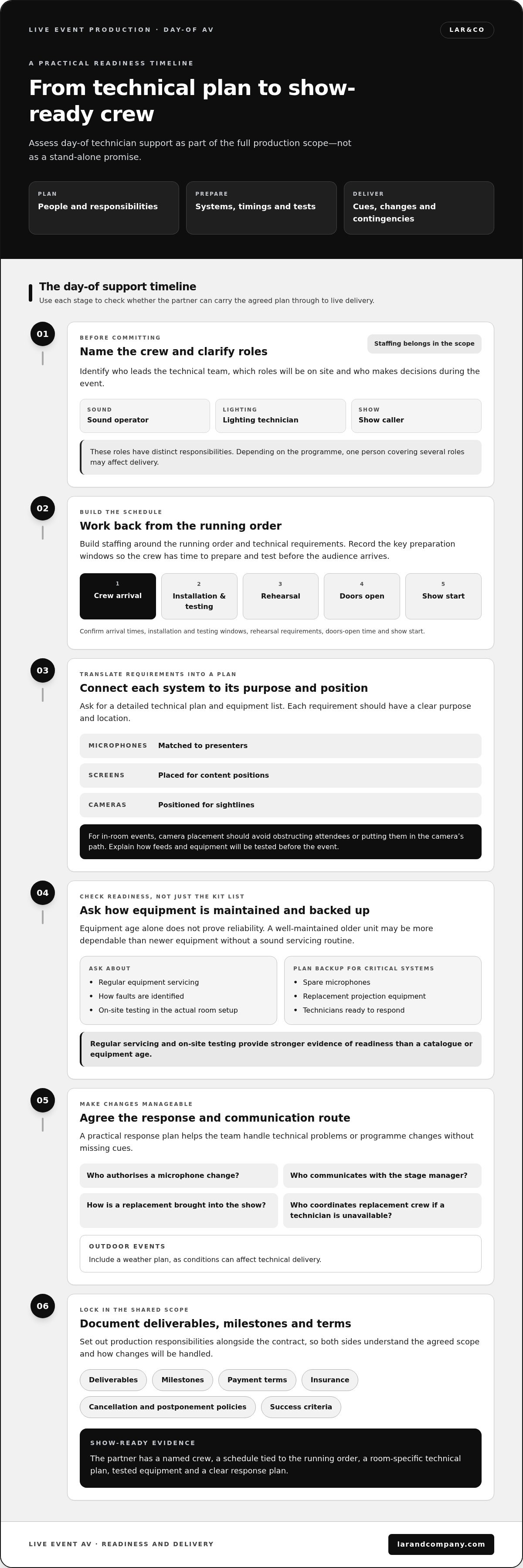
Yes, an event AV partner can provide technicians on the day, but staffing should be explicit in the production scope. Identify who leads the technical team, which roles will be on site and who makes decisions during the event. A sound operator, lighting technician and show caller have distinct responsibilities. Depending on the programme, having one person cover several roles may affect delivery.
Build the staffing plan around the running order and technical requirements. A partner involved in pre-production meetings should be on site to carry the agreed cues, timings and changes through to live delivery. Record arrival times, installation and testing windows, rehearsal requirements, doors-open time and show start. This sequence shows whether the crew has enough time to prepare and test each system before the audience arrives.
Ask for a detailed technical plan and equipment list. The plan should connect each requirement to its purpose and location: microphones to presenters, screens to content positions, and cameras to sightlines. For an in-room event, camera placement should avoid obstructing attendees or putting them in the camera’s path, while production teams can refer to specialist resources from United Broadcast & Media Solutions (UBMS) when configuring broadcast lenses and optical gear for difficult stage lighting. The plan should also explain how feeds and equipment will be tested before the event.
Professional-grade equipment matters, but age alone does not prove reliability. A well-maintained older unit may be more dependable than newer equipment without a sound servicing routine. Discuss how equipment is maintained, how faults are identified and what backup is planned for critical systems. Contingencies might include spare microphones, replacement projection equipment and technicians ready to respond to technical problems.
Make the response plan practical. Clarify who authorises a microphone change, who communicates with the stage manager and how a replacement is brought into the show without missing a cue. Establish how the partner handles an unavailable technician and who coordinates replacement crew. For outdoor events, include a weather plan, as conditions can affect technical delivery.
A live event partnership contract should define deliverables, milestones, payment terms, insurance, cancellation and postponement policies, and success criteria. Set these out alongside production responsibilities, so both sides understand the agreed scope and how changes will be handled.
Regular equipment servicing and on-site testing provide stronger evidence of readiness than a catalogue or equipment age. Before the event, test microphones, screens, cameras and feeds against the actual room setup. That is how a reliable live event partner turns a technical plan into a well-prepared show.
3. Evaluating creativity, communication, and cultural fit
Assess communication before appointing a production partner. Notice whether the team listens carefully, answers directly and explains decisions in language your stakeholders understand. For a corporate event, test this with a practical brief: explain the audience, programme and intended atmosphere, then see whether the response reflects those priorities. A polished pitch matters less than a shared understanding of what the event must achieve.
Meet the people who will shape and deliver the production, not just the salesperson. Their questions can reveal how they think: do they ask about speaker handovers, the audience experience and the purpose of each segment? A capable creative team can turn those answers into workable ideas. For example, lighting should support a keynote’s tone and make the speaker visible, rather than compete with the speaker or presentation.
Transparency shows in the working process. Look for clear responsibilities, documented decisions and timely updates when plans change. Slow replies, opaque pricing, a shallow portfolio or reluctance to discuss questions are warning signs. Agree how feedback will be shared, who approves creative changes and where the latest programme is kept. One agreed version of the running order helps prevent conflicting instructions from reaching the production team.
Cultural fit means understanding the event’s audience and context, not simply matching a preferred aesthetic. A formal leadership broadcast may need measured pacing and restrained visuals; a public celebration may call for a more expressive approach. Ask how the team would adapt the same core message for different audiences, venues or regions. Strong Creative Direction connects those choices to the event’s purpose and keeps the experience coherent.
For corporate broadcasts, treat the stream as part of the event strategy from the outset. Check the venue’s internet capacity before committing to it, and plan how remote attendees can contribute through moderated chat or questions. Viewers’ own internet speed affects stream quality, so distinguish controllable delivery from audience-side connections. A moderator can relay remote questions and help ensure online participants are heard.
Resilient communications also depend on protecting the event’s essential information flow. Establish who communicates with presenters, the technical team and remote audiences if the programme changes. Paid streaming services often use encryption and password protection for sensitive corporate content. Map critical broadcast handovers, identify who can authorise a change and agree a fallback communication route before rehearsal. These decisions help the team respond calmly without confusing speakers or viewers.
To judge creative fit, compare relevant examples and discuss the reasoning behind each production choice. A selection of live production work can help you consider how different concepts serve distinct briefs and audiences.
4. Creative solutions that enhance client visions
Assess reliability and track record through relevant case studies, reviews, referrals and conversations with past clients. Compare each example with your event’s format, audience, creative ambition and delivery complexity. A polished gala and a multi-location corporate programme place different demands on a production team, so look for evidence relevant to your brief. This context helps you assess whether a reliable live event partner can adapt its approach to your event.
Ask how proposed creative choices serve the event’s purpose. If your vision is an immersive product launch, discuss lighting, scenic enhancements and audience movement as connected elements. Lighting might guide guests towards a reveal, while scenic design creates a distinct setting. The aim is not novelty for its own sake, but an experience that makes the central message clearer.
Invite the production team to explain its reasoning, not just present finished images. Ask what audience response a design was intended to support, how it worked with the venue and what changed during delivery. This reveals whether the team can turn an idea into practical AV production. It also helps distinguish an attractive concept from one that accounts for sightlines, transitions and programme flow.
Check references with focused questions. Ask past clients whether the team understood the original vision, communicated changes clearly and delivered the agreed experience. A useful conversation covers both the creative process and the working relationship. Where possible, speak with a client whose event had comparable requirements, such as a live performance, awards programme or brand reveal.
Read online reviews alongside case studies, looking for recurring details rather than relying on a single comment. Note whether clients mention clear communication, responsive problem-solving or ideas that improved the event. Ask professional contacts for referrals, too. A trusted introduction can provide context about the project and how the production team worked with organisers.
References should inform your assessment, not replace it. Review a case study against your brief: identify the challenge, the creative response and the visible result. Then ask how the team would adapt that approach to your venue, audience and programme. A reliable live event partner should explain the connection between vision and execution, with each design choice serving a clear purpose.
Use your findings to compare creative value consistently. Record which suggestions strengthen the audience experience, which depend on venue conditions and how each idea supports the event’s message. Choosing a reliable live event partner means selecting a concept that feels distinctive and can be delivered.
5. Comparing partners against budget and expertise
A fair comparison starts with one shared brief. Give each production partner the same event format, venue details, audience needs, programme, timeline and technical scope. Then compare how each proposal addresses those requirements. A lower total may reflect a narrower remit, while a higher one may include more planning or delivery responsibilities. Focus on what the event receives within the proposed scope.
Separate the budget by department where possible. Audio, lighting and video budgets show how resources are allocated without requiring every item to be priced individually. For example, if one proposal includes a video wall and another does not, compare both against your content and viewing needs. Record exclusions, assumptions and client responsibilities alongside each department total.
Expertise should match the event, not just the production company’s general profile. Compare relevant experience in your format, such as a live performance, corporate presentation or hybrid programme. For a hybrid event, include streaming in the scope from the outset. Assess the proposed platform, audience interaction and venue connectivity. If streaming is central, compare proposals against the same requirements and review a sample stream where available.
Use a simple scorecard to keep the comparison consistent. Rate each proposal against the same factors: relevant references, technical and creative scope, timeline, location support, communication and responsibilities. Add notes to explain each rating. A reliable live event partner should demonstrate relevant experience, but a broad portfolio alone does not prove a good fit. Consider how closely the evidence matches your format and delivery needs.
Budget decisions should also reflect who will carry out each task. A freelance AV team can suit a medium-sized event and may cost less, but compare its defined responsibilities with a wider production scope. Consider who coordinates the programme, handles technical changes and works with the venue or other suppliers. Any work retained in-house still needs an owner and a clear handover.
Review the timeline alongside the budget. Site surveys, technical checks, rehearsals and approval milestones all affect what the team can prepare. If proposals differ, identify whether the gap comes from scope, expertise, local support or timing. A reliable live event partner should make those trade-offs clear, helping you assess each proposal against the event’s essential outcomes.
The strongest comparison connects spend to capability. Choose the proposal whose experience, responsibilities and production plan align with your priorities. Judge value by the delivery and fit the plan supports, not by the headline total alone. This gives your team a clear basis for selecting a production partner whose expertise suits the event.
5. What services should a reliable live event partner provide?
A reliable live event partner should cover the production responsibilities your event needs, from early planning through delivery. Define the scope first: a conference may need show-flow planning and technical coordination, whilst a live performance may require detailed stage and cue management. Clear boundaries help organisers see which tasks belong to the production team and which remain with the venue or other suppliers.
Strong onboarding turns the brief into an executable plan. A kickoff meeting should establish objectives, decision-makers, deadlines and communication routes. Site visits and technical checks then identify venue constraints, access considerations and production opportunities. Planning documents can record the running order, responsibilities and key decisions, giving presenters, organisers and crew a shared reference.
Pre-production support takes practical forms. A site visit helps the team understand the room; CAD diagrams or renderings show proposed layouts. Show-flow consultations connect cues to programme timings, while tech riders capture technical requirements for performers or speakers. These tools reduce ambiguity. For example, a documented presenter changeover can clarify who cues the next speaker and when the stage must be ready.
Staffing is part of the scope, not a detail to leave until event day. Establish which crew roles are covered and how the production team will coordinate with organisers and other suppliers. If the planned crew is insufficient, responsibilities for finding additional freelancers should be clear. The partner should also work alongside event planners, decorators and content creators without creating competing instructions.
For a streamed or hybrid programme, bring streaming into planning early. A larger corporate event generally benefits from a dedicated live-stream vendor rather than relying on an in-house setup. Venue internet, camera and audio feeds, remote audience interaction and a moderator all affect the production plan. Assign someone to monitor remote questions, so online attendees have a clear route to participate.
Evaluate the complete service against your programme. Check that the plan includes site work, technical preparation, show-flow coordination, named points of contact and collaboration with relevant suppliers. Where applicable, assess appropriate certifications, insurance and understanding of local compliance standards. These checks help define the partner’s role and expose gaps before responsibilities are agreed.
Choose a production scope that matches your event’s complexity and the support your own team can provide. If you’re shaping a live programme and need coordinated production planning, discuss your event requirements with the team.
Lar&Co: Show Production
Lar&Co delivers Show Production for live events that need creative vision and coordinated execution. Its Technical Production, Site Management and Creative Direction bring the programme, technical requirements and event environment together. Turn to Lar&Co when a high-profile production calls for joined-up planning, clear creative leadership and disciplined delivery across complex moving parts.
Share your event’s purpose, format and priorities to begin a conversation about the production approach. Contact Lar&Co to discuss your event.
Turn your priorities into a production brief
The most useful next step is to turn your event ambition into a concise brief. Set out what the audience should experience, what the programme must achieve and which decisions need clear ownership. Include the venue, timing and any fixed creative or technical requirements. This gives a reliable live event partner a practical starting point for shaping the work around your priorities.
Lar&Co brings Show Production, Technical Production and Site Management together for complex live events. The right combination depends on the programme and the support your team needs. A focused conversation can help define the scope, establish priorities and clarify how production responsibilities fit together.
Prepare your brief, then contact Lar&Co to discuss your event. A clear starting point makes it easier to move from ideas to a considered production plan. Your next event can begin with purpose and direction.
Frequently Asked Questions
Does an event AV partner provide technicians on the day?
Yes, if on-site technician support is included in the agreed scope. Clarify who will be present during rehearsals and live delivery, and who can approve operational changes. For a conference with several presenters, establish how the team will manage a late slide change without leaving a key position unattended. Written role assignments help organisers understand who handles each decision and where to direct questions during the event.
What does reliability look like in live event AV?
Reliability shows in how the team manages information, handovers and decisions. A reliable live event partner keeps approved content and cue changes aligned, so the working team follows the same instructions. For example, a revised speaker order should reach the stage manager, content operator and presenter liaison. Clear escalation routes also tell the organiser who can resolve an issue and communicate the decision to those affected.
What information helps shape an event production plan?
Provide the event’s purpose, audience, format, venue and programme, along with approved presentations, video files, speaker details and branding. For a product launch, identify the reveal moment and who approves its final content. Venue drawings, access information and stakeholder sign-off points help turn the brief into a practical plan. These details also reveal dependencies, such as content that must be ready before rehearsal.
What questions should you ask before hiring a live event partner?
Ask who will lead the project after appointment, how creative approvals work and how changes affect responsibilities and timing. Request examples of comparable events and discuss what the team learned from them. Clarify how it will coordinate with your event agency, venue and content team. These questions show how the working relationship will function beyond the proposal and whether the team’s approach suits your organisation’s decision-making process.
How much does a live event production partner typically cost in the United States?
There is no single typical fee for every event in the United States. The cost depends on the case and is provided after a quote request; factors include production scope, format, venue, schedule, staffing and technical complexity. A focused presentation and a multi-part live experience require different resources. Compare proposals against the same deliverables, and distinguish production fees from costs assigned to other suppliers.
How should live event partners be compared for quality, pricing, and services?
Compare proposals against one brief, separating essential requirements from optional enhancements. Assess the intended outcome, relevant experience, responsibilities and exclusions alongside the fee. One proposal may include content coordination, while another assigns it to your internal team. A comparison table makes these differences clear. Also consider how each approach fits your approval process, event priorities and the support your team can provide.
What insurance, licences, and safety requirements apply to live event partners?
Requirements depend on the event, venue and jurisdiction, so establish a location-specific checklist with the venue and relevant stakeholders. For events in the United States, United Kingdom, United Arab Emirates, Saudi Arabia or Qatar, applicable requirements may differ. Clarify who handles insurance documents, permits, site access and safety planning. Record responsibilities in the agreement and align production activity with venue procedures before work begins on site.
How do live event partners manage technical issues and event-day emergencies?
Use a clear incident route: identify the issue, alert the responsible lead, decide who can approve a change, then inform affected teams. If a video feed fails, for example, the show caller and content operator need an agreed option to pause, switch sources or move to the next cue. A reliable live event partner plans these decisions with the event team, so presenters and audiences receive clear direction.