National Day Ceremony Production: Choreography and Planning
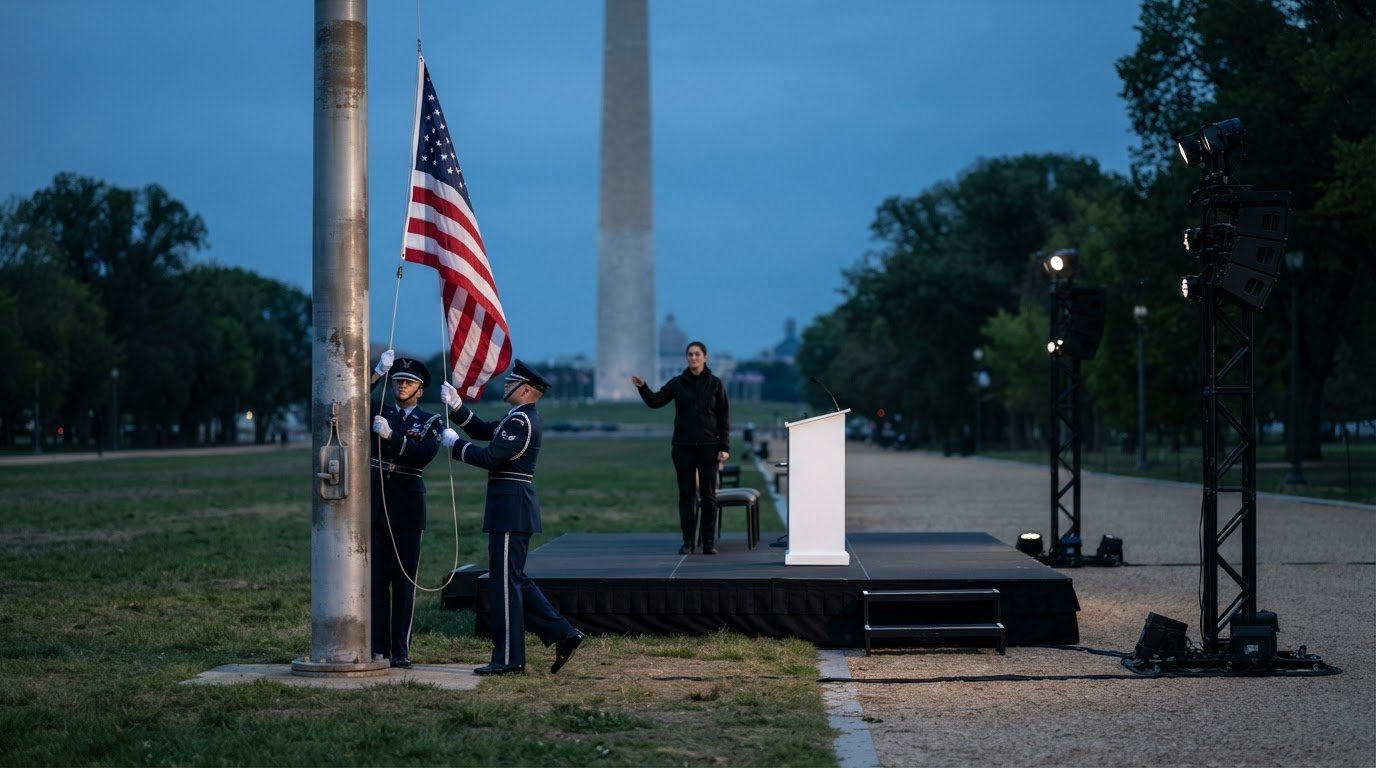
Strong national day ceremony production brings two elements together: deliberate ceremonial choreography and practical planning. Choreography gives the occasion sequence and meaning; planning aligns people, movement, technical cues and the site around that sequence. Together, they create a celebration that feels coherent to participants and audiences.
A ceremony may look effortless, but its impact depends on carefully coordinated moments. A procession, flag raising, anthem or public address each needs a clear place in the programme and a smooth transition to what follows.
This article explains how choreography can shape a National Day ceremony, which elements commonly form its programme, and how planning supports the experience from arrival to close. It also explores how creative direction, show production and technical production bring an event together, with the country’s traditions and the occasion’s character at its centre.
Key Takeaways
• Shape ceremonial movement around the occasion’s meaning, so processions, transitions and key moments feel deliberate.
• Coordinate the programme, site, people and technical cues as connected planning tasks rather than separate workstreams.
• Use familiar ceremony elements as a framework, then adapt them to national traditions and the event’s purpose.
• Assess production costs through the scope, creative and technical requirements, site conditions and operational complexity.
• Identify the permissions and legal considerations relevant to the location, venue and planned activities early in the planning process.
Ceremonial choreography
National Day choreography turns a programme into a sequence people can follow and understand. It determines where a procession begins, how participants move and when each formal moment takes place. In national day ceremony production, these movements also shape how the event presents national identity in a shared public space.
Start with the ceremony’s central purpose. A commemoration of independence may emphasise a flag procession and formal address, while a civic celebration might give more space to music and community participation. Each choice affects the running order, the route across the site and transitions between speakers, performers and official representatives.
Plan the route as part of the choreography, not as a separate logistical detail. A procession might move from an entrance to a flag-raising area, then continue towards a performance space. Mark the start, destination, entrances and exits on one plan. This helps coordinate participant movement with sound, lighting and stage cues.
Step-free routes, clear sightlines and designated viewing areas can make a National Day ceremony more accessible and inclusive. Provide spoken and written cues, and consider captions or sign-language interpretation so audiences can follow key moments. Include these needs when planning the route, programme and stage positions.
Anthems and collective singing are familiar elements of National Day ceremonies. Their placement matters: an anthem before an address creates a different sequence from one that closes the formal programme. Rehearsing the transition helps performers, speakers and technical teams understand their cues. It also signals clearly to the audience that the ceremony has moved into a new moment.
The route itself can express ideas of belonging and civic identity. A procession through a civic centre, for instance, connects the ceremony to a recognisable public setting. Routes, participants and sequence can all carry symbolic meaning, so align them with the occasion’s story rather than adding movement for spectacle alone.
Manufacturing Day offers a useful contrast, but it is an industry initiative, not a national day ceremony. Held annually on the first Friday in October, it introduces people to American manufacturing through formats such as plant tours and hands-on activities. Its variety shows why choreography must suit the purpose: a factory visit needs a different movement plan from a formal national procession.
Set the sequence before assigning technical cues, whatever the format. A written running order can identify each entrance, transition and pause, giving participants a shared reference. Rehearsals then test whether the route, timing and cues work together. This preparation keeps the ceremony clear, respectful and connected to its intended meaning.
Planning tasks and organisation
Production planning connects the venue, programme, technical requirements and people responsible for decisions. For a ceremony across a public site, that coordination also helps organisers prepare for changing conditions.
Indoor and outdoor venue options
Match the ceremony’s format to the physical conditions of its location. An indoor hall offers a defined performance area and shelter, while an outdoor civic space can accommodate processions and larger public movement. The choice affects audience layout, sound coverage, staging and contingency plans.
Compare access, sightlines, entrances, exits and available technical infrastructure before setting the programme. A flag procession may suit an open square, while a formal address with projected content may work better in a controlled hall. In either setting, map audience routes alongside performer and crew movement.
Permits and legal requirements
Permit planning identifies which permissions and venue conditions may apply to the site and planned activities. Requirements depend on where the ceremony takes place, who controls the space and what the programme involves. A public square, private property and civic building can each have different approval processes.
Record the location, access arrangements, planned structures, sound use and audience movement in one production file. Use it to establish relevant permissions with the responsible site or authority. This keeps legal and venue considerations connected to the event design instead of leaving them as a late administrative task.
Production costs
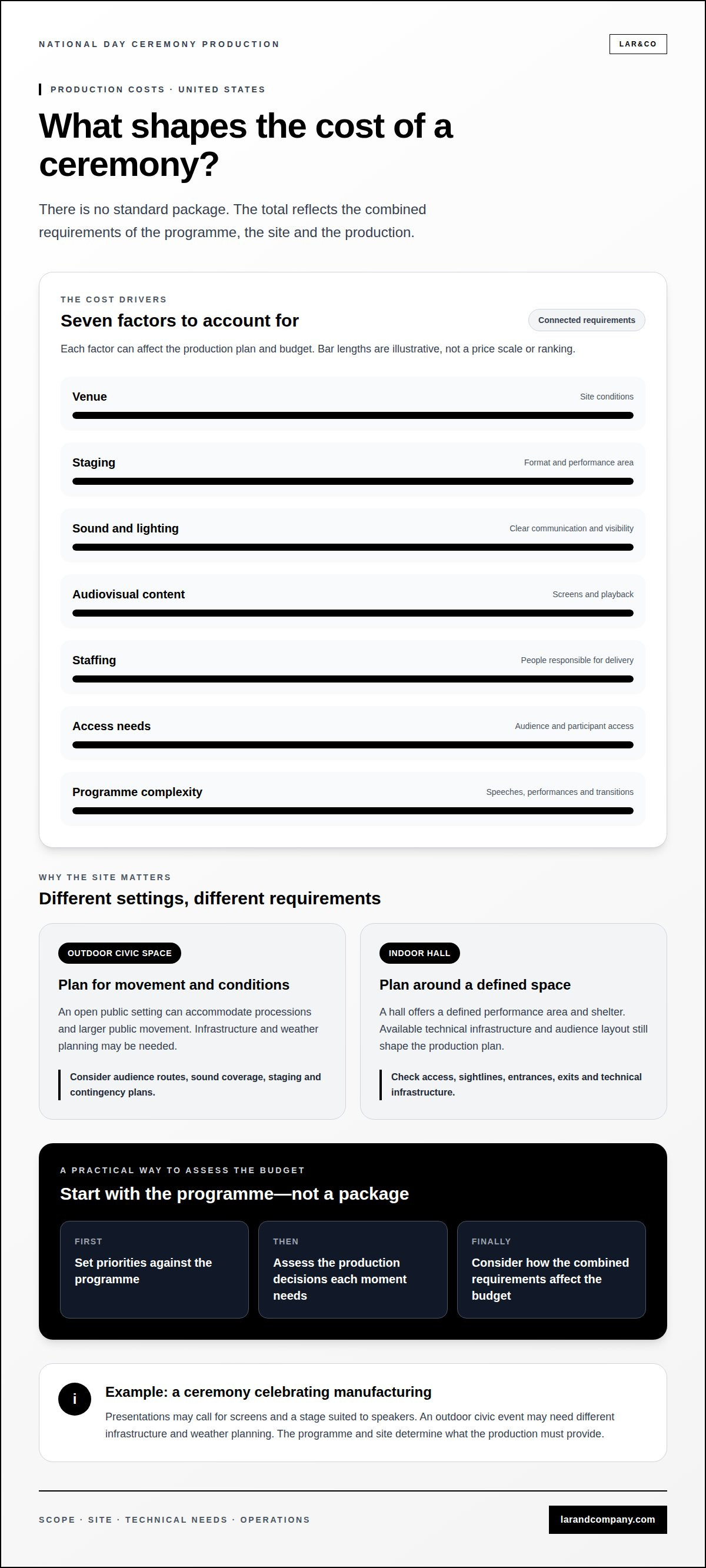
Production costs in the United States depend on the event’s scope, site conditions and technical demands. Major cost drivers include the venue, staging, sound and lighting, audiovisual content, staffing, access needs and programme complexity.
A ceremony celebrating the manufacturing economy, for example, may need screens for presentations and a stage suited to speakers. An outdoor civic event may need different infrastructure and weather planning. Set priorities against the programme first, then assess how each production decision affects the budget. The total reflects the combined requirements, not a standard package.
Sound, lighting and staging equipment
Equipment needs follow the programme and venue. A spoken address may call for microphones, a sound system and a stage; performances or projected content can add lighting, screens and audiovisual playback. Equipment should support clear communication and visibility across the planned audience area.
Build a cue plan that links each speech, performance and transition to its technical requirements. For example, a video introduction needs a playback source, a visible screen and a sound cue. In the United States, technical planning should also account for power access, cable routes and control positions.
Risk planning should cover weather, crowd movement, security arrangements and emergency access. At an outdoor ceremony, rain or wind can affect staging, equipment and audience comfort; an indoor venue still needs clear routes and managed entry. Assign responsibility for monitoring conditions, communicating changes and coordinating responses. Show audience areas, restricted spaces and routes for staff and emergency services on the site plan.
Reviewing live event production examples can show how programme, site and technical decisions work together in practice.
What elements are typically included in a national day ceremony?
National day programmes share recognisable forms, while reflecting each country’s history and civic traditions. National anthems and collective singing are building blocks of national day design. A flag ceremony, formal address, musical performance or cultural presentation may also feature, depending on the occasion and setting.
The opening sets the event’s tone and gives the audience a clear point of entry. It might begin with a welcome from a host, followed by a flag procession or the arrival of official representatives. For a ceremony marking independence, organisers may frame the opening around the country’s founding story. Make that connection clear without crowding the moment with competing introductions.
Formal elements often create the ceremony’s central structure. An anthem can lead into an address, while a commemorative reading or moment of reflection may link the event to a defining national story. France observes its national day on 14 July; the United States observes its national day on 4 July. Each date gives its ceremony a distinct historical context, shaping the choice of speakers, music and themes.
Music and performance can carry cultural meaning beyond the formal programme. A choir, instrumental ensemble or dance group might present work connected to national heritage. Each choice should relate clearly to the event, rather than serve as a separate showcase. Moving from an address into a performance can shift the mood while keeping the programme connected to its central theme.
Some ceremonies include public participation alongside official proceedings. A shared song, community reading or carefully framed moment of reflection can give attendees an active role. Clear introductions, visible programme cues and a sequence that explains each element help audiences follow along. These choices make the ceremony’s structure and significance easier to understand.
The closing should feel deliberate, not like the schedule has simply run out. A final musical performance, closing remarks or collective gesture can bring the programme to a clear conclusion. If the ceremony continues into a public celebration, signal what happens next and where attendees can go. This preserves the ceremony’s formality while opening the event to wider participation.
No single template suits every National Day. A ceremony’s elements should reflect its purpose, audience and traditions. Start with the country’s story, then choose the formal, cultural and participatory moments that express it. The result is a coherent programme shaped by meaning, not a checklist of familiar features.
How much does it cost to produce a national day ceremony in the United States?
There is no single standard price for producing a national day ceremony in the United States. The cost depends on the event’s scope and is provided after a quotation request. Major cost drivers include the programme, venue, audience requirements, production design and operational complexity.
Start by defining the event’s scope. A short formal ceremony with speeches has different requirements from a programme combining a procession, live music, cultural performances and public activities. Each addition affects the time, personnel and technical resources required. A clear programme helps distinguish essential elements from optional enhancements.
The venue shapes the production budget. A civic hall may already have staging, seating or technical infrastructure, while a public square may require those elements to be brought in and coordinated. Site access, audience layout and distances between performance areas also affect planning. Compare venue requirements with the intended programme before fixing the production scope.
Creative and technical decisions are another budget area. An anthem and a series of speeches need a different design from a ceremony featuring projected films, multiple performances and elaborate lighting cues. The production team can map each programme moment to its practical requirements, making the relationship between creative ambition and delivery visible during budget planning.
People and operational demands also affect the total. A ceremony with official speakers, performers, presenters and distinct audience areas needs more coordination than a simpler programme. Consider who manages the running order, participant movements, site operations and technical cues. Clear responsibilities help organisers understand the work behind each part of the event.
Include access and audience experience in the core budget. Step-free viewing areas, accessible routes, captions or sign-language interpretation can shape site layouts and programme delivery. These requirements are easier to integrate when identified early, rather than added after the stage plan and audience arrangements are set.
Build the estimate around cost categories, then connect each category to a defined event requirement:
Venue and site
location, layout, access and site infrastructure.
Programme
speeches, procession, music and cultural presentations.
Production
staging, sound, lighting and audiovisual content.
Operations
staffing, coordination and audience arrangements.
Contingencies
provisions shaped by the location and event design.
This structure helps decision-makers compare changes without treating the ceremony as a fixed package. If the venue changes from an indoor hall to an outdoor civic space, revisit the site and production categories. If a performance is added, assess its staffing, rehearsal and technical needs. Link every adjustment to a specific requirement and its effect on delivery.
For a national day ceremony, the sound budget reflects the complete plan, not just the visible stage. A defined scope, cost categories and clear priorities provide a more useful basis for a project-specific quotation.
What permits and legal requirements apply to a national day ceremony?
In the United States, permissions and legal considerations depend on the event location, site control and planned activities. A ceremony in a civic square has different planning factors from one inside a privately managed hall. The site, structures, sound, audience movement and programme all affect which approvals and conditions need attention.
Start by identifying who controls the venue. A public space may involve the relevant local authority, while a private venue has its own site arrangements. This distinction matters because organisers need to understand how access, setup, audience areas and event activity fit the location’s conditions. A written site plan gives those discussions a practical reference.
Next, map the event’s physical footprint. A stage, temporary structures, barriers, cables and audience zones can affect how a site is used. A procession may also change movement through nearby areas. Include these features in the production plan so permissions and operational arrangements reflect the actual ceremony, not an earlier programme draft.
Sound and performance plans matter too. An amplified address, live music and a quiet commemorative moment create different demands for the surrounding venue and public space. Record where sound originates, where audiences gather and how the programme moves between activities. These details help clarify which venue conditions and local requirements are relevant.
Use a planning register to keep responsibilities and decisions visible. It can include:
Venue
site controller, access conditions and agreed use.
Event footprint
stage, structures, barriers and audience areas.
Programme
speeches, procession, performances and amplified sound.
Operations
entrances, exits, crowd movement and emergency access.
Responsibility
the person tracking each approval and related condition.
Connect safety and crowd management directly to the site plan. For a ceremony with a procession, account for participant routes and audience viewing positions. For an indoor event, entrances, exits and accessible routes shape the layout. Consider security arrangements, weather contingencies and emergency access alongside the programme, rather than treating them as separate paperwork.
Keep the register current as the event changes. Adding a performance, shifting the stage or changing the audience layout can affect site arrangements and operational responsibilities. A revised plan should show what changed, who owns the follow-up and how the change affects the event footprint. This gives the organising team a single working view.
Discuss your event production requirements with Lar&Co for a ceremony with complex site and production demands.
Lar&Co: Show Production
Lar&Co delivers Show Production for national day ceremonies that need a clear creative vision and coordinated execution. Turn to the team when the programme, technical demands and site operations need to work as one.
Creative Direction shapes the event’s concept and programme. Technical Production coordinates production requirements, while Site Management supports the operation of the event environment. Together, these services connect the ceremony’s creative intent with its practical delivery.
For complex public celebrations, this joined-up approach can help organisers manage formal proceedings, performances and audience movement within one production plan. Discuss your ceremony with Lar&Co through the contact page.
Shape the next celebration with intent
Give the next National Day a defining idea before shaping the programme. Clear creative direction helps every moment feel connected to the occasion, while a considered production plan turns that intent into a live experience. Strong national day ceremony production brings the story, setting and delivery into focus.
For a celebration with complex moving parts, start by defining the central experience and the decisions needed to deliver it. Lar&Co brings Show Production, Technical Production and Site Management together, aligning creative and operational considerations. Begin with a clear brief: what the occasion should express, who it needs to reach and how the audience should experience it.
Take that first step with a focused discussion about your ceremony. Contact Lar&Co about your ceremony and begin shaping a celebration with purpose.
Frequently Asked Questions
What is a national day ceremony production?
National day ceremony production coordinates a live programme marking a country’s national day. It brings the creative concept, formal protocol and practical delivery into one plan. For example, the production brief can show how an official address leads into a public celebration, clarifying the experience for organisers, participants and audiences before the event.
How do you plan and produce a national day ceremony step by step?
Begin by agreeing on the ceremony’s purpose, audience and decision-makers. Develop a programme brief setting out the desired tone, key moments and approval process. Assign an owner to each decision, then align the script with participant requirements and production cues. Before delivery, review the final programme with stakeholders and record changes. Afterwards, capture feedback and follow-up actions to inform future celebrations.
How do you book a venue, performers, speakers, and production vendors?
Start with one event brief describing the ceremony’s purpose, programme format, audience and site requirements. Use it to assess venue suitability and define the performer, speaker and technical roles required. Coordinate invitations, approvals, schedules and responsibilities through named contacts. Keep confirmed details in one shared record, so a speaker change or revised performance can be reflected in the programme and production plan.
What should a national day ceremony production timeline and checklist include?
Build the timeline around decision points, not just dates. Record when the event brief, programme, venue arrangements, participant details and technical plan need approval. Add owners and dependencies, such as finalising a speech before preparing its introduction. The event-day checklist can cover arrivals, access, cue references and contact roles. After the ceremony, record follow-up decisions and improvements for the next edition.