How to save a failing event project by finding the cause
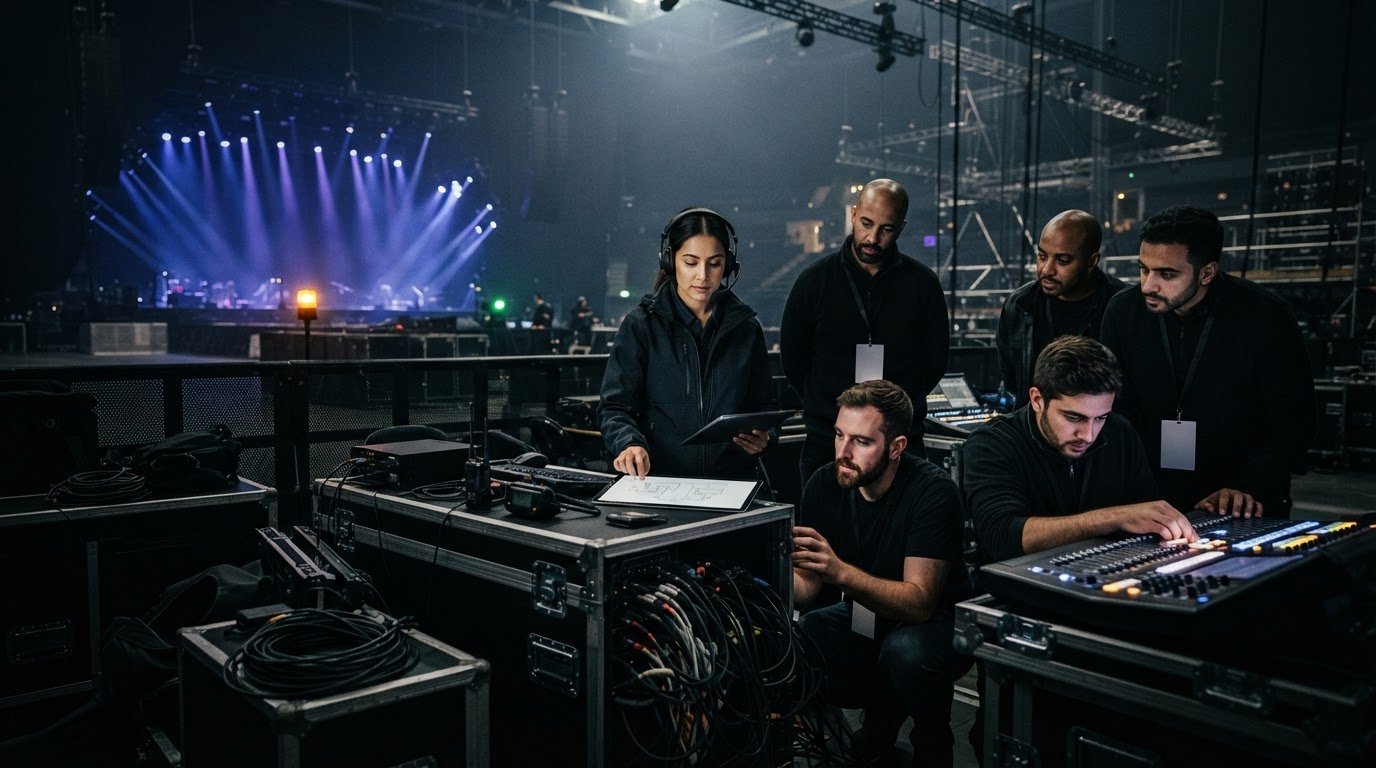
More resources won’t rescue an event project if the underlying problem remains. To learn how to save a failing event project, identify the root cause first, then tackle the obstacle posing the greatest threat to delivery. A recovery plan should clarify priorities, ownership and how progress will be measured.
When deadlines slip, decisions stall or the team is stretched, the pressure to act quickly is understandable. But a rushed fix can make matters worse. A clear diagnosis helps separate symptoms from causes and match the response to the project’s actual constraints.
This guide explains how to uncover problems through team conversations and project reports, reset responsibilities when needed, and adapt scope and strategy without losing sight of the event’s purpose. It also covers early warning signs to watch, so you can act while there is still room to make deliberate decisions.
Key Takeaways
• Speak with team members and review project records to find underlying causes, not just visible symptoms.
• Reshape responsibilities or leadership where needed, and give new team members time to settle into the work.
• Define the current position, the desired outcome and the main obstacles before adapting the strategy.
• Watch for slipping deadlines, unclear communication and incomplete or faulty work as early warning signs.
• Assess communication, scope, risk and change processes to pinpoint what is holding the event project back.
1. Interviewing team members to identify problems
Start with evidence, not blame. To understand how to save a failing event project, define the visible problem, gather clues and test possible causes. The U.S. Environmental Protection Agency describes diagnosis as defining a problem, narrowing its causes and testing hypotheses iteratively. Apply that approach to a missed approval, late delivery or unresolved production decision.
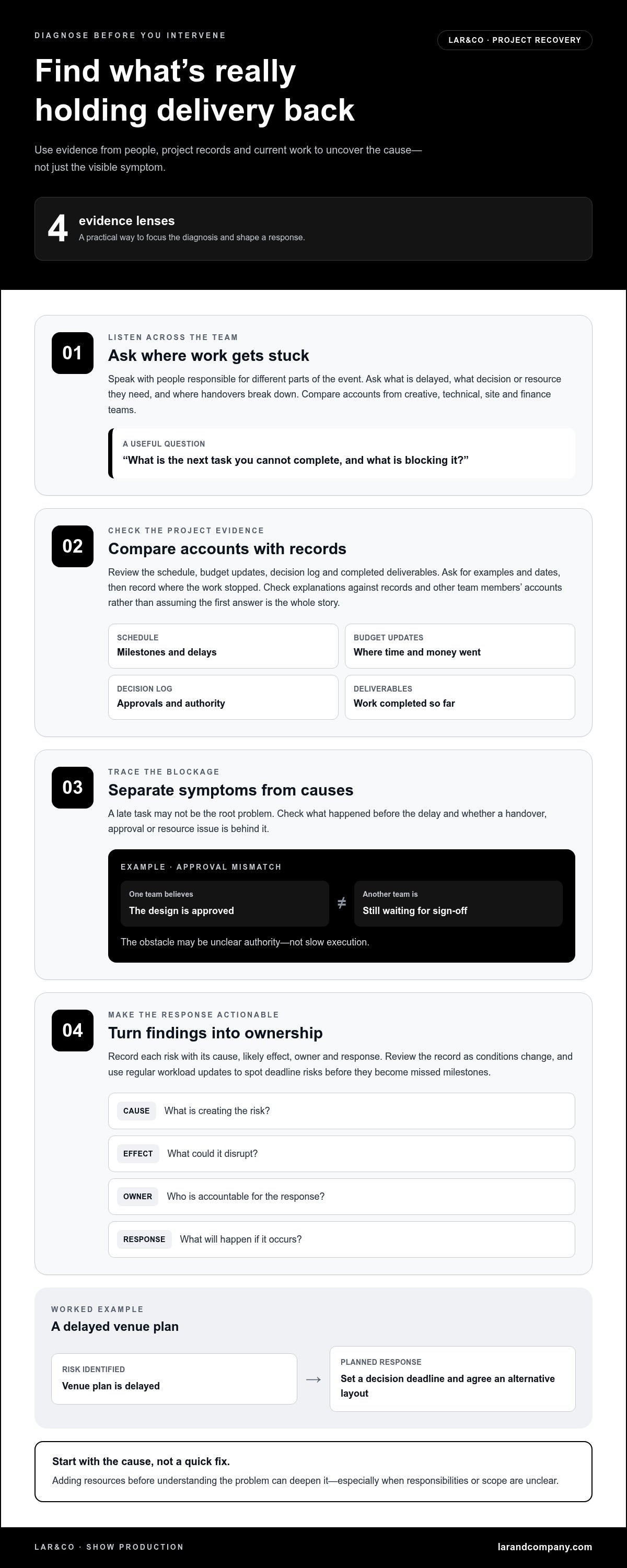
Speak with team members responsible for different parts of the event. Ask what is delayed, what decision or resource they need, and where handovers break down. Compare answers from creative, technical, site and finance teams. If one department says a design is approved while another is waiting for sign-off, the issue may be unclear authority rather than slow execution. Ask for examples and dates, then record where the work stopped.
Keep the conversation specific and safe. Ask, “What is the next task you cannot complete, and what is blocking it?” A production lead might point to a late floor plan; the venue liaison might say access details remain unresolved. These answers help identify causes the project lead can address. Don’t assume the first explanation tells the whole story. Check it against records and other team members’ accounts.
Use accurate reporting to pinpoint where time and money went, and when disruption began. Compare the schedule, budget updates, decision log and completed deliverables. If a supplier’s work appears late, check whether the approval date also shifted. Regular workload updates can reveal deadline risks before they become missed milestones. Reports can also show whether capacity is a broad problem or a delay affecting a small group or single handover.
Turn your findings into a risk-and-response record. For each risk, note its cause, likely effect, owner and response if it occurs. A delayed venue plan, for example, could prompt a decision deadline and an agreed alternative layout. Review the record as conditions change. Adding resources before identifying the cause can deepen existing problems, especially when responsibilities or scope are unclear.
There is no single standard event cancellation fee or refund obligation across the United States. The outcome depends on the signed agreement, its cancellation and refund terms, timing, costs already incurred, and applicable state or local rules.
To renegotiate vendor contracts or payment terms, identify the specific pressure and propose a workable alternative in writing. For example, request revised milestones, staged payments or a change in scope, then document any agreed amendments before relying on them.
2. Restructuring a project team
A recovery plan needs clear ownership. Assign each essential deliverable to one accountable team member, then confirm that person has the authority and skills to complete it. If venue access decisions stall between operations and production, for example, appoint one lead to coordinate approvals and communicate decisions. Keep responsibilities visible so work doesn’t fall between departments.
Assess performance through completed work, workload and required expertise, not assumptions about individual commitment. Compare assigned tasks with actual progress, then determine whether delays stem from unclear direction, competing priorities or a skills gap. A technical lead may be experienced but overloaded, while another team member may have capacity to take on a defined task. Use schedules and regular updates to tell the difference.
Change the team structure only when it addresses a clear obstacle. You might redistribute tasks, appoint a decision-maker or add specialist expertise. Explain why each change is needed and how it supports the revised plan. Make transitions gradual where possible: transferring a key production task without its history can create new delays. If a team member is still caught up in earlier mistakes, agree expectations and responsibilities before changing their role.
Bring the team on board by explaining the recovery plan in practical terms. Set out what has changed, what remains fixed and how each role contributes to delivery. Ask team members to identify dependencies the new structure may have missed. A revised rehearsal schedule, for instance, must account for both venue access and technical preparation. Address disagreements directly, then record decisions so everyone works from the same plan.
Visible progress and manageable commitments help maintain motivation. Break a distant deadline into near-term deliverables, recognise completed work and channel frustration into resolving the next obstacle. Share project management responsibilities instead of leaving every decision with one lead. Schedule regular feedback, keeping each discussion focused on actions, blockers and owners. New team members need time to understand their responsibilities and fit into established workflows.
To reduce event costs without damaging the attendee experience, protect the elements that matter most to guests and sponsors. Review each expense against its purpose, then cut or redesign lower-priority items instead of reducing essential delivery or staffing.
Build a recovery budget around revised tasks, committed spending, expected income and payment dates. A cash-flow forecast should show when money is due in and out, helping the team spot timing gaps and adjust commitments before they disrupt delivery.
After restructuring, assess whether the new allocation is working. If a specialist is needed to fill a defined skills gap, give them a clear remit and integrate their work with the existing team. If outside expertise is needed over an extended period, weigh that ongoing requirement against the value of a lasting change to team responsibilities. Practical guidance from Fruitbowl Events Agency demonstrates how structured oversight and clear processes support projects through every phase. The aim is a focused group that can act on the recovery plan, not simply a larger team.
3. Contingency planning and adapting project strategy
Reset the plan around four points: the project’s current state, its desired outcome, the obstacles and possible actions. If a venue change threatens the production schedule, for example, identify which deliverables depend on the venue and tackle the most immediate dependency first. Break the recovery goal into smaller steps, each with a named owner and deadline. This keeps the team focused on decisions that can still change the outcome.
Build contingencies for specific risks rather than adding a generic reserve. A blanket 10% contingency has little value without a clear reason for the amount. Instead, connect each risk to a response: if an approval is delayed, identify the decision-maker, the latest workable sign-off date and the alternative plan. The dates and consequences should make the decision point visible.
Review scope against the event’s purpose and planned benefits. When the deadline cannot move, prioritise essential deliverables and handle change requests quickly. A late request for an additional stage feature, for instance, must be weighed against its impact on technical preparation, staffing and the audience experience. If an event element isn’t working, redirect effort towards what remains valuable to attendees and sponsors. Record what changes, who approved it and what it means for delivery.
Contingency plans can reduce cancellation risk by setting out alternatives for critical dependencies. Prepare backup arrangements for venue access, key suppliers, essential technology and staffing, then define who can activate each response. For outdoor events facing site or weather uncertainties, working with dependable infrastructure specialists such as eventrentalmalaysia.com ensures essential setups like canopies and marquees can be secured without delay. Regular communication helps the team identify changes before they become major problems. A charged uninterruptible power supply, for example, can provide backup if technology fails.
Use the SAVE technique with the team for 30 minutes to identify and prioritise risks, then repeat the exercise every couple of months. Record each risk, its trigger, the response and the person responsible. Update the plan when scope, resources or external dependencies change. This turns contingency planning into an active tool, not a document that sits untouched.
Cancel or postpone when the event’s essential requirements can’t be met safely or operationally, or when the remaining plan no longer serves its core purpose. Compare viable alternatives, such as reducing scope or changing the date, with the consequences of proceeding.
For delays, changes or cancellation, give attendees and sponsors a clear update through agreed channels. Explain what has changed, what happens next and when they’ll receive another update. Align internal stakeholders first so the messages are consistent.
4. Early warning signs of project failure
Watch for recurring small delays across the event schedule. A late artwork approval may seem minor, but it can delay printing, signage installation and venue checks. Record each missed milestone against its planned date, then identify which dependent tasks are at risk. A pattern matters more than an isolated slip.
Communication problems often surface as conflicting instructions or decisions without a clear owner. The venue team, for example, may be using an older floor plan while production has approved a revised version. Check that teams share current documents, know who can approve changes and receive decisions promptly. Repeated requests for clarification can signal unclear responsibilities or missing information.
Watch for vague status reports. If a task is repeatedly described as “nearly done” without a finished deliverable, ask what remains before it can be used. A draft running order, for instance, is not operationally ready if timings, transitions or approvals are still open. Define completion in practical terms, such as a signed-off version shared with everyone who needs it.
Faulty or inconsistent public-facing information is another warning sign. A ticketing page with incorrect event details, a website form that fails to submit, or a social post showing an outdated time can damage confidence and create extra work. Assign someone to test each channel and route enquiries to an owner. Check that updates match across the event website, social media and ticketing sites.
Use a simple warning log to turn observations into action. For each issue, record the evidence, its effect on delivery, the responsible owner and the next review point. If sponsor artwork arrives late, note which printed or digital materials depend on it. This makes consequences clear and helps the team decide whether to adjust the schedule, find an alternative or escalate the decision.
Review warning signs at regular project meetings, not just after a milestone fails. Compare planned and actual progress, unresolved decisions, workload pressure and quality issues. If several tasks depend on one approval, treat it as a risk before the deadline slips. A shared view of blockers helps stakeholders decide sooner and prevents teams from acting on conflicting assumptions.
Early evidence also gives project leaders a stronger basis for discussing a deadline extension. Present the affected deliverables, the cause of delay, the time needed to resolve it and the impact of keeping the current date. Explain, for example, whether late technical information affects one rehearsal or the entire production sequence. A precise account supports a practical decision; a vague claim of falling behind does not.
Finally, check whether corrective actions resolve the warning sign. If a revised ticketing page still generates unanswered enquiries, the issue may involve both the page and the response process. Recheck the channel after changes, record what has improved and escalate persistent problems. This discipline helps teams act while there is still time to protect delivery.
5. How do you quickly assess why an event project is failing?
Start with one clear symptom, such as a missed approval, repeated schedule changes or an unusable deliverable. Separate what happened from what the team assumes caused it. A late stage plan, for example, is evidence; “the supplier is unreliable” is a hypothesis. This distinction keeps the diagnosis grounded in facts and stops the first explanation becoming the final one.
Use an Ishikawa fishbone diagram to organise possible causes around the problem. Put the event issue at the head, then map contributing factors across people and processes. For a delayed production schedule, branches might include staff capacity, unclear approval routes, missing information and scope changes. Ask the team to support each branch with evidence, such as a decision log entry or an unassigned task.
Next, test the strongest explanations against project records and direct observations. If mixed signals seem to be the cause, compare the latest schedule, meeting notes and team instructions. If staff shortages appear responsible, review workloads and confirm that critical tasks have owners. If an issue remains unresolved, establish who can decide, what information they need and which dependent tasks are waiting.
Review four control areas: communication, scope, risk and change management. Ask whether the team shares a way to communicate decisions, has a clear definition of what the event must deliver, maintains a risk record and follows an approval process for changes. A scope change that bypasses approval, for example, can disrupt schedules and resource allocation. Look for evidence that each process is being used, not merely documented.
Then narrow down the causes by tracing the sequence of events. Identify when progress first diverged from plan, what changed immediately beforehand and which tasks were affected next. If a venue decision led to a revised layout, which then delayed technical plans, the decision may be an upstream cause. Test this by checking whether other delays share the same dependency.
Finish the assessment with a concise cause-and-action record. For each confirmed issue, state the evidence, root cause, effect on delivery, decision owner and next corrective action. Keep untested explanations separate. This gives stakeholders a shared basis for decisions and makes it easier to see whether an intervention resolves the original problem.
For complex live events, a structured production review can turn findings into practical delivery decisions. A conversation about your event project is a useful next step when the diagnosis points to challenges that need experienced production oversight.
Assess what is hampering the project to identify a practical way forward. A review is most useful when it distinguishes symptoms from the conditions sustaining them: staff shortages, mixed signals and unresolved issues are common underlying causes. Weak organisation and communication can also contribute to project failure, so confirm that agreed processes work in practice.
Lar&Co: Show Production
Lar&Co supports event projects where recovery depends on aligning creative intent with practical delivery. Its Show Production, Technical Production and Site Management expertise can bring complex moving parts into a coordinated plan. Creative Direction can also clarify which elements of the experience the event needs to protect as priorities shift.
Turn to Lar&Co when the diagnosis points to delivery challenges across production, technical requirements or site operations, and the project needs clear coordination to move forward. The next step is a direct conversation about the event, its current obstacles and the decisions ahead.
Contact Lar&Co to discuss your event project.
Make the next decision with clarity
Knowing how to save a failing event project means treating recovery as a series of deliberate decisions, not a last-minute scramble. Turn your assessment into a clear mandate: what must change, who can authorise it and what the team will prioritise from here.
Be direct about the trade-offs. A revised plan may require a smaller scope, a different sequence of work or a new decision about the event’s format. Set out the delivery implications and give stakeholders a clear basis for action. Once a decision is made, communicate it consistently and keep the team focused on the agreed direction.
Where the challenge calls for experienced support with a complex live event, Lar&Co can discuss the project’s needs and the next practical steps. Contact Lar&Co to discuss your event and explore a considered way forward. A clear decision today can give the team a stronger foundation for what comes next.
Frequently Asked Questions
You know something is wrong … now what do you do?
Stop competing fixes from moving ahead before their impact is understood. Appoint one person to coordinate immediate decisions, preserve the latest schedules and approvals, and tell stakeholders where to direct urgent issues. Then decide which commitments require senior approval to change. For example, the team could pause optional design revisions while continuing venue and technical decisions. This creates control without stopping essential work.
What steps can an event manager take to get a failing project back on track?
Set out the recovery decision in a short written brief. State the event’s essential outcome, the available choices, who is authorised to approve each one and what evidence is needed. If a programme change affects access arrangements, for instance, identify who must approve the revised plan before it is shared. Ask stakeholders to acknowledge the same version, so decisions don’t get split across separate conversations.
How do you prioritise tasks and cut scope for an event with a tight deadline?
Rank tasks by how they support the event’s core promise and depend on other work. Protect essential attendee and operational needs first, then remove or simplify features that add little value or require extensive coordination. A complex visual element, for example, might be replaced by a simpler design that preserves the event’s central experience. Leave time for integration and final checks rather than treating unfinished work as ready.